
Why Gauteng timing is never just about kilometres
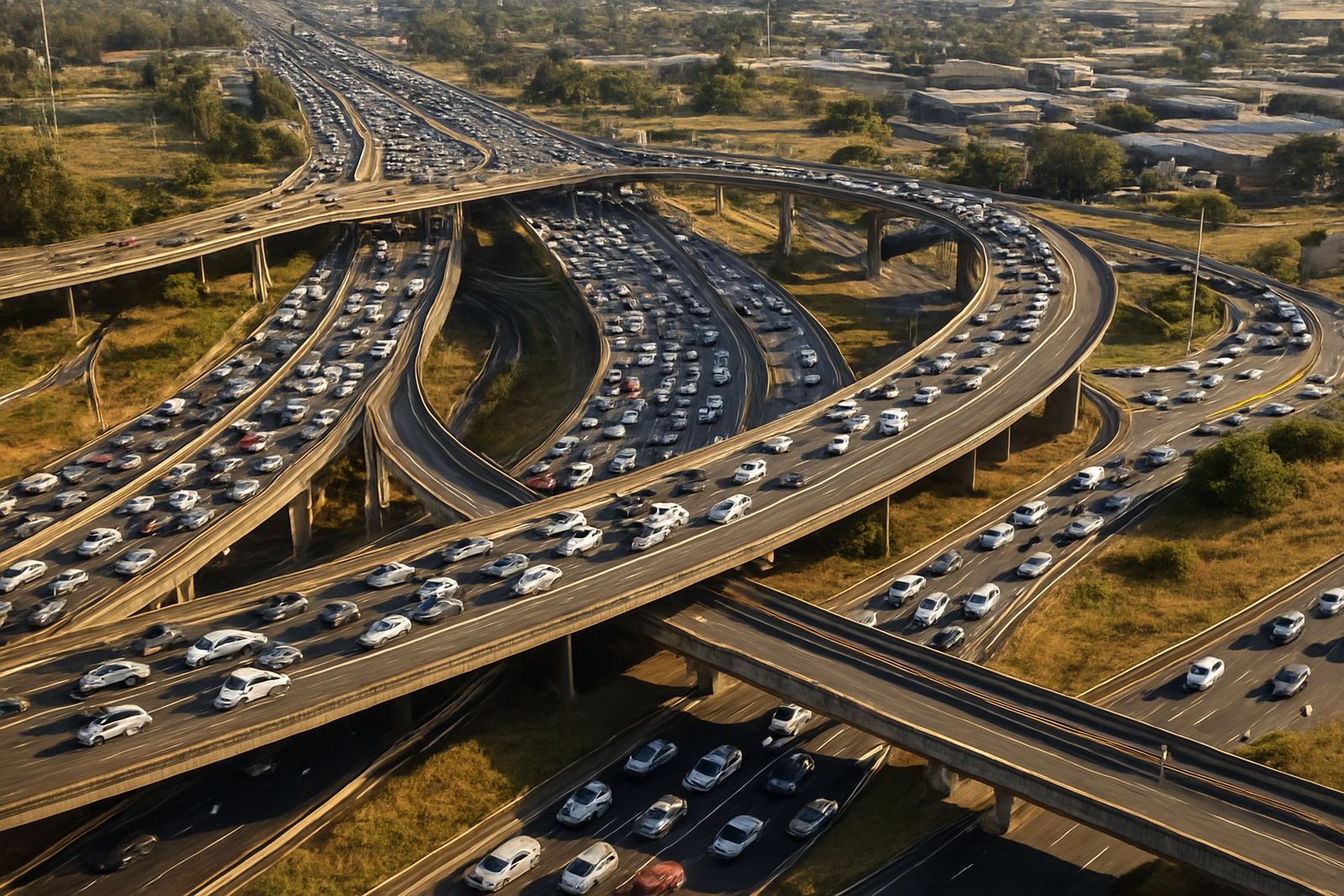
On paper, Gauteng looks simple. Most key business nodes sit within a few tens of kilometres of each other, but that does not mean a courier trip is quick. Morning congestion on the N1, N3, M1 and R21 can change pick-up times by 20 to 40 minutes, sometimes more when there is rain, an incident or roadworks near a major interchange.
For same-day courier work, the real measure is not distance alone, it is when the parcel leaves the counter and which corridor it needs to use. A document from Midrand to Sandton is a very different run from Midrand to Pretoria East at 07:30. The first may be delayed by office traffic and school runs, the second by freeway pressure and local access roads near business parks.
That is why planning starts with the route, not only the address. Our Midrand base gives us a practical central point for Gauteng traffic patterns, but dispatch still checks the day’s movement before confirming a collection window. Small parcels and documents move fastest when we match the job to the least congested lane of travel, not just the shortest one.
Peak periods that affect same-day collections
Most delays in Gauteng follow a pattern. Early morning traffic builds fast between 06:30 and 08:30, especially on the N1 north and south, the M1 through the inner city, and the N3 toward the East Rand. A second wave appears from about 15:30 to 17:30 when people leave offices, school activities wrap up and delivery vehicles compete with commuter flow.
For businesses that rely on scheduled routes, these windows matter. A collection booked for 08:00 may still be possible, but it needs more lead time if the pickup point is in Sandton, Rosebank or Pretoria CBD. The same applies to end-of-day runs when a client wants proof of delivery before close of business. Good timing can save an extra trip and keep admin from spilling into the next morning.
- Book earlier where access is tight, such as office towers, industrial parks and busy malls.
- Allow extra time for rain, load shedding traffic signals, and accident delays on major arterials.
- Give clear contact names for reception, security or loading bays so the driver does not waste minutes searching.
- If the parcel is urgent, say so at booking. Priority work should not sit in the same queue as routine internal mail runs.
What changes between Midrand, Sandton and Pretoria runs
Each Gauteng node has its own traffic behaviour. Midrand to Sandton often looks easy on a map, but office access, parking controls and peak-hour volume near corporate parks can slow down the handover. Randburg and Johannesburg CBD require careful timing around feeder roads, taxi movement and building access rules. Pretoria runs can be smoother off-peak, yet morning congestion on key links can still catch out a driver who leaves too late.
East Rand collections are often affected by freight traffic and airport related movement. Durban and Cape Town metro hub work is different again, with local business districts, municipal stopping rules and the timing of handovers at multi-storey buildings. A courier plan that works in one area may fail in another if the same time slot is used across all branches.
That is why we separate service planning by area. A same-day run from Midrand to a client in Sandton does not need the same buffer as a multi-stop route across Johannesburg, Randburg and the East Rand. It also helps when returning documents, because the return leg may hit a different traffic pattern from the outbound trip, especially after 14:00.
Practical booking habits that keep the day moving
Clients get better results when they book with a few simple details ready. The more exact the instruction, the easier it is to fit the job into the day’s traffic picture. A collection note that says only Johannesburg is not enough. A note that says 10th floor, security gate on Rivonia Road, recipient available after 09:30 is much more useful.
Our team uses traffic-aware scheduling for daily collections, dedicated courier work and scheduled routes. That means the route planner checks whether a driver should leave immediately, wait for a better window, or combine nearby jobs to reduce dead time. It also means the client gets a more realistic delivery expectation from the start.
- Give full street addresses, floor numbers and building access instructions.
- Tell us if the item must be signed for, counted or checked against a reference list.
- Note if the parcel is sensitive to heat, humidity or rough handling so packaging can be adjusted.
- For tender submissions and deadline work, ask for priority booking early in the day rather than after midday.
A local example: Midrand to Sandton before the rush
Consider a legal document leaving a Midrand office at 07:15 for delivery in Sandton. If the courier leaves immediately, the route may still meet traffic on the N1 off-ramp and then again near the Sandton business district. If the same document is collected at 08:30, it may arrive later than expected even though the distance has not changed. The difference is the traffic window, not the route length.
Now shift that same job to 10:00. The trip is often easier because commuter pressure has eased and office receptions are fully staffed. That can be the better choice for items that are not immediate emergency work. In practice, this is why same-day courier service should not be booked only on urgency. It should be booked on timing that matches the road conditions, building access and the client’s actual deadline.
At A-Two, that kind of planning is part of how we handle document exchange, internal mail runs and returns management across Gauteng. Marnus Lombard and the team keep the focus on punctual handover, clear reporting and practical route choices, so the job gets done without guessing. A small typo in timing can cost an hour; a good plan can save the whole day.
How to use traffic planning for better delivery outcomes
Traffic planning is not only for the dispatch team. It helps businesses decide when to send contracts, when to move samples and when to spread multi-branch deliveries across the day. A well timed route can reduce fuel waste, improve sign-off times and avoid late afternoon congestion that often catches people off guard.
If your business has regular movement between Midrand, Johannesburg, Sandton, Randburg, Pretoria or the East Rand, it is worth setting standard booking times for repeat jobs. That makes it easier to plan around school traffic, municipal signal failures and the odd heavy storm that slows the whole network. The same principle works for Durban and Cape Town metro hub runs, where access roads and central district congestion can change quickly during busy periods.
Good same-day courier work in Gauteng is part logistics and part timing. The road decides a lot, but a clear booking, a realistic cutoff and a driver who knows the area can make a real difference.