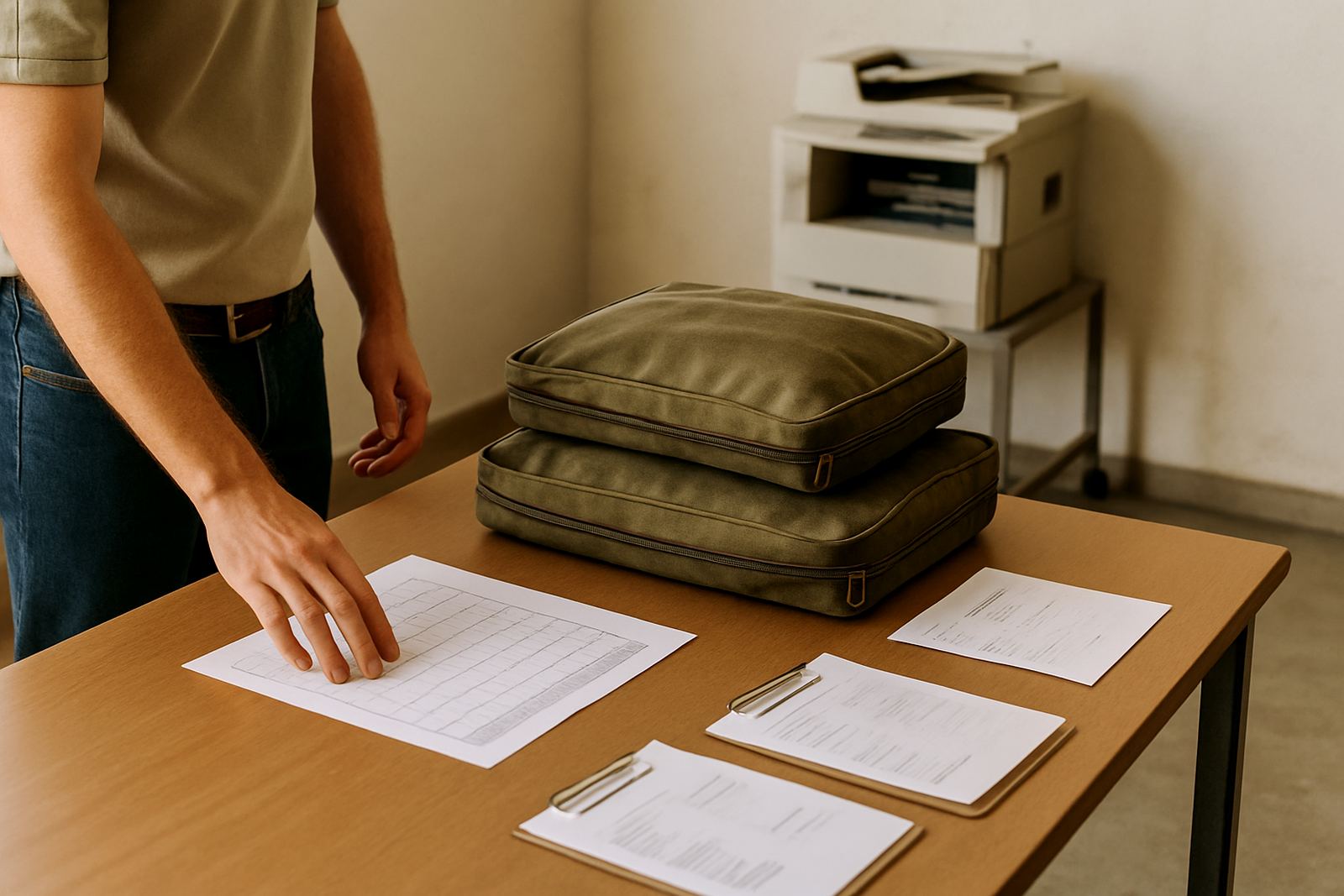


What proof means on a same-day courier run
Proof is the record that shows who released the item, who accepted it and when the handover took place. For same-day courier work, that usually includes a collection note, a signature or name of the receiver, time stamps and any special instruction noted at dispatch. If the parcel is a contract, tender pack, invoice bundle or identity document, the proof trail should be clear enough for your files and your client records.
In practice, proof helps settle questions quickly. If a branch in Sandton asks whether a file reached Midrand before 14:00, or a Cape Town office needs to confirm that a sealed envelope arrived intact, the handover record answers it. It also helps during load-shedding, when reception teams may be running on backup power and staff are juggling deliveries with limited systems access.
A clean proof process does not need to be complicated. It just needs consistency, legible names and a place to store the records. The more exact the handover note, the less time spent chasing missing detail later.
What to capture at collection and delivery
At collection, the sender should confirm the item description, the number of packages and any seal or file reference. At delivery, the receiver should sign or acknowledge receipt and note any discrepancy straight away. If a document was handed over at a reception area, the proof should show the company name, the department if known, and the full name or initials of the person who accepted it.
For businesses that move items between Johannesburg, Pretoria, East Rand, Durban and Cape Town, the same standard should apply at every point. Whether it is a dedicated courier, scheduled route or a priority booking, the proof record should stay the same. That makes internal mail runs and branch transfers easier to reconcile at month end.
- Sender name, branch and contact person
- Receiver name and company or department
- Date, time and delivery address or branch
- Item description, file count or parcel count
- Condition notes, seal number or packaging remarks
- Signature or name of the person accepting the handover
If an item is refused, note why. A closed office, missing authorised recipient or damaged packaging all need to be recorded. That note can save a lot of back and forth later.
How to sign correctly without slowing the run
Many delays happen because people are unsure who should sign. The easiest rule is simple: the person accepting the item must have the authority to receive it. If that person is unavailable, reception may sign only if your company allows it. For sensitive documents, the delivery note should state whether reception handover is acceptable or if a named recipient is required.
Use a full name where possible, not just initials. A signature on its own can be hard to read, especially on a busy route when the driver is moving from one site to another. If the person signing is not the intended recipient, include their role. For example, reception, finance, admin or security. That extra line often clears up confusion later, especially where multiple companies share a building or floor.
In coastal areas like Durban and Cape Town, humidity can affect paper records. Keep proof slips dry and flat, and scan them as soon as they are filed. In Gauteng, dust and heat can also make paper curl or fade if it sits in a vehicle too long. A quick scan after delivery is a small habit that protects the record.
What to keep in your file and how long to keep it
Keep the collection note, delivery note, signed proof and any exception note together. If the job involved multiple stops, keep each stop record with the route reference. For account clients, it is worth keeping the month-end summary as well, because it helps match invoices to completed movements.
A practical filing set for businesses in Midrand, Sandton or Randburg would include the following:
- Booking reference and date
- Pickup note with sender details
- Delivery proof with signature and time
- Exception notes for delays, refusals or damaged packaging
- Invoice reference if the run is billed to account
- Any client instruction that affected the handover
Retention periods depend on the nature of the record and your own compliance needs. Tender submissions, contract packs and regulated documents should be kept according to your internal policy and any legal requirement that applies to your business. When in doubt, keep the record longer rather than shorter. It is easier to discard old proof later than to recreate it after a dispute.
How to handle exceptions, delays and partial handovers
Not every delivery ends with a clean signature and a smile. Sometimes the receiver is at a meeting, a building guard will not allow access, or the address details are incomplete. When that happens, the driver or dispatcher should record exactly what was done and who was contacted. Vague notes like not delivered are not enough.
Use a simple exception format: what happened, where it happened, who was contacted and what the next step is. If only part of a consignment was handed over, count the pieces and list what remained. For example, two of three envelopes delivered or one file held back pending authorisation. That protects both the sender and the courier team.
For metro runs between Johannesburg and Pretoria, traffic or access delays can change the timing by the hour. In Durban, building access and port side traffic can also affect timing. The proof record should show the actual time of handover, not the planned time. That keeps the file honest and avoids disputes later on.
A simple proof checklist before you close the job
Before you file the job away, check that the record is complete and readable. A quick review at the end of the day helps prevent missing signatures and lost notes. Mishka in client services often sees that a small missing detail can delay reconciliation for days, while a full proof pack clears the account quickly.
- Is the sender name correct and complete?
- Does the receiver name match the person who signed?
- Is the date and time visible?
- Is the item description accurate?
- Were any delays, refusals or damage noted?
- Is the proof stored in the correct file or job reference?
If your business uses scheduled routes or multi-branch support, this checklist should be part of the close-out routine. It is easier to catch a missing detail at 17:00 than to search for it after month end. A steady process keeps the paper trail tidy and the handover clear.
When to ask for extra proof on sensitive items
Some items need more than a standard signature. Tender submissions, signed contracts, legal packs and confidential HR documents may need a named recipient, a stamped acknowledgment or a second witness on your side before release. If the item is valuable or time-sensitive, ask for an extra note on the way out and again on delivery. That extra line can matter when there is a query later.
Willem on compliance and safety usually recommends a stricter record for anything that could affect money, legal standing or deadlines. That includes priority bookings and urgent branch transfers where the stakes are higher. If the item is going to a metro hub in Cape Town or Durban, or moving across Gauteng in peak traffic, the record should be strong enough to show the full path from collection to handover.
Good proof is not about paperwork for its own sake. It is about knowing where the item was, who had it and when it changed hands. That is what makes a courier run defensible, practical and easy to trace when someone asks for the record three days later.