
1. Confirm what the shipment actually is
Start by separating documents from parcels and checking that the item matches the booking notes. If you are sending legal papers, tender packs, signed contracts or small business items, say so clearly when you submit the collection request so the right vehicle and route can be planned.
For same-day work in Midrand, Sandton, Randburg or Pretoria, the difference between a flat envelope and a small box matters. It affects handling, space in the vehicle, and whether the package needs extra protection against rain, dust or rough loading at a busy office park.
2. Pack it so it can handle the road
Use a strong envelope, satchel or box that suits the contents. Documents should be flat and dry, while small parcels need enough padding so they do not move around inside the carton. If you are sending something fragile, add inner wrapping and mark the outside clearly.
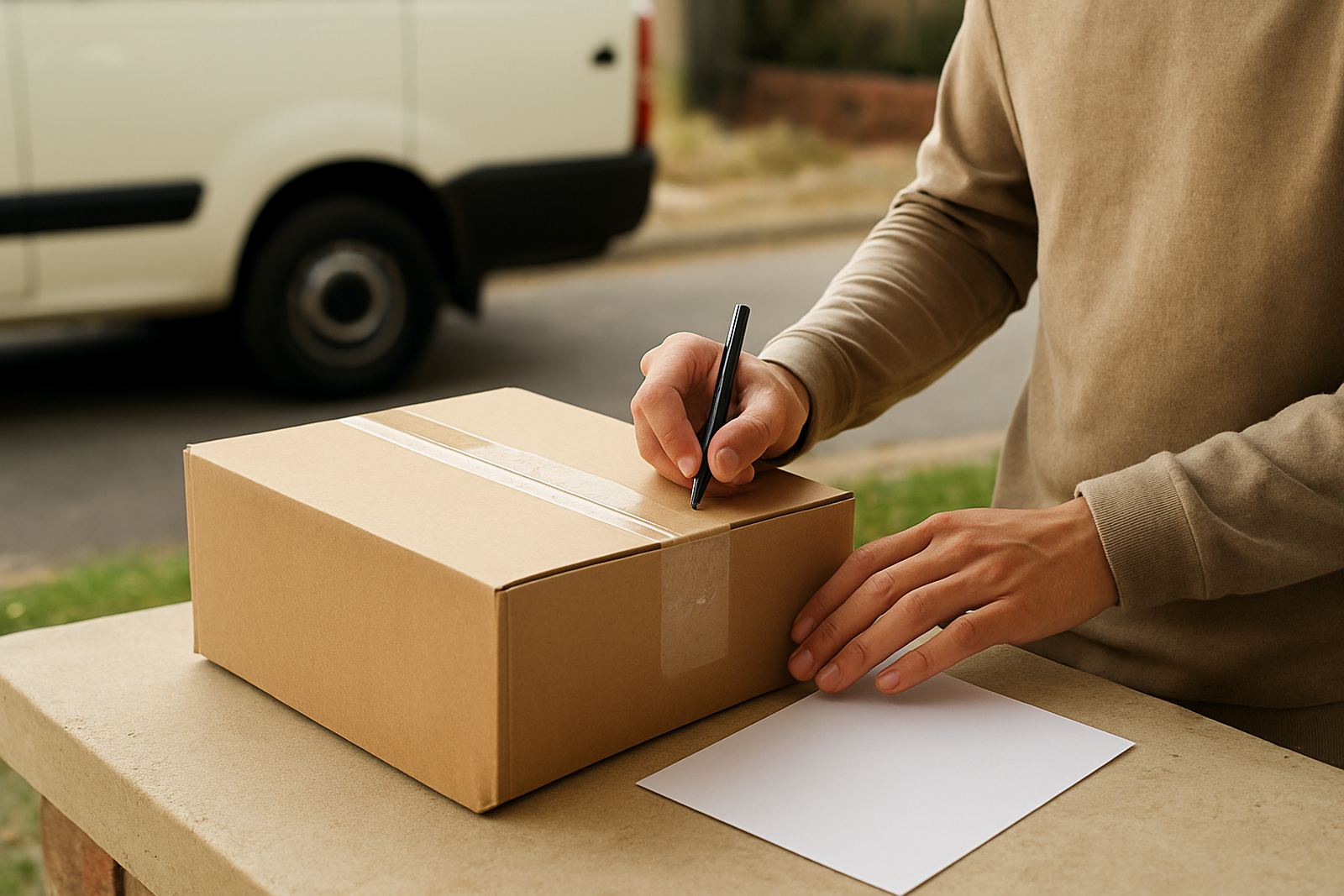
- Seal all openings with proper tape, not a loose strip that can lift in heat or humidity.
- Remove old labels so there is no confusion at handover.
- Keep the parcel size practical for a one person lift if possible.
- If the item is weather sensitive, use a plastic sleeve or waterproof outer layer.
In Durban especially, coastal moisture can be hard on paper and packaging, so a little extra protection helps. In Cape Town, strong wind and sudden rain can also catch unprotected parcels out if they are sitting near a loading bay.
3. Make the address and contact details easy to read
The collection label or booking note should show the sender name, full street address, building name, floor, suite number and the best contact person on site. If the courier is collecting from a reception, security gate or warehouse office, say that up front. That saves time and avoids a driver waiting at the wrong entrance.
Also check the delivery details. A simple spelling mistake in a suburb, industrial area or business park can send a parcel to the wrong side of town. For Gauteng runs, that can mean the difference between a quick Midrand to Sandton hop and a trip that gets stuck in traffic near the wrong interchange.
- Include a clear building or gate reference.
- Add an internal extension or room number if reception needs it.
- Use the actual receiver name, not just a company name.
- Write any access instructions plainly, such as loading bay only or after 10h00.
4. Keep the paperwork with the parcel
Documents should travel with the correct supporting papers. If the delivery needs a waybill, invoice, signed authorisation, return slip or tender cover sheet, have it ready before collection. That way the driver does not have to wait while someone searches for the last page or asks another department to print it.
For internal mail runs and multi-branch support, label each bundle by destination and department. If you are moving items between Johannesburg, East Rand and Pretoria offices, a simple divider sheet or colour mark can stop the wrong branch getting the wrong pack. It sounds basic, but it prevents a lot of back and forth later on.
5. Tell us about access, timing and loading conditions
Same-day collections work best when the handover point is easy to reach. If your building has security sign-in, parking restrictions or a loading dock with limited access times, mention it in advance. If the site is inside an office park with boom gates or a warehouse with shift changes, those details matter more than people think.
In Midrand and the surrounding metro routes, traffic can shift quickly around school times, rain and peak delivery windows. A driver who knows there is a loading bay at the back, or that reception closes for lunch, can plan the run properly and avoid a wasted trip.
- State the collection window clearly, for example 09h00 to 11h00.
- Note security rules, ID checks or sign-in steps.
- Tell us if the parcel needs two people to lift.
- Let us know if the site has limited parking or height restrictions.
6. Separate urgent items from routine mail
If you have several items ready at once, sort them before the courier arrives. Place urgent documents on top or in a separate envelope and mark them clearly. Routine internal mail, returns and general office transfers should be grouped separately so the dispatcher can confirm the right priority.
For businesses using scheduled routes, this makes the collection faster and the proof report cleaner. It also helps when there are multiple stops across Sandton, Randburg and Johannesburg CBD on the same run. A neat handover saves time and keeps the chain of custody simple.
7. Do a last-minute sender check before handover
Take thirty seconds to look at the final parcel before it leaves. Check the seal, the address, the recipient name and whether anything inside should be declared as fragile or time-sensitive. If a document set contains originals, make sure the sender copy has been filed before collection, because once the driver leaves there is no quick fix.
One Midrand client preparing tender submissions now keeps a small sender tray near reception. The team packs the tender, checks the cover sheet, confirms the collecting name and then signs off the item before 11h00. It cut out a lot of last minute drama, and the courier leaves without needing to wait while someone hunts for a missing annexure or authorisation letter.
That habit is worth copying. A prepared sender helps the route move smoothly, and the parcel gets to the next stop without avoidable delays.