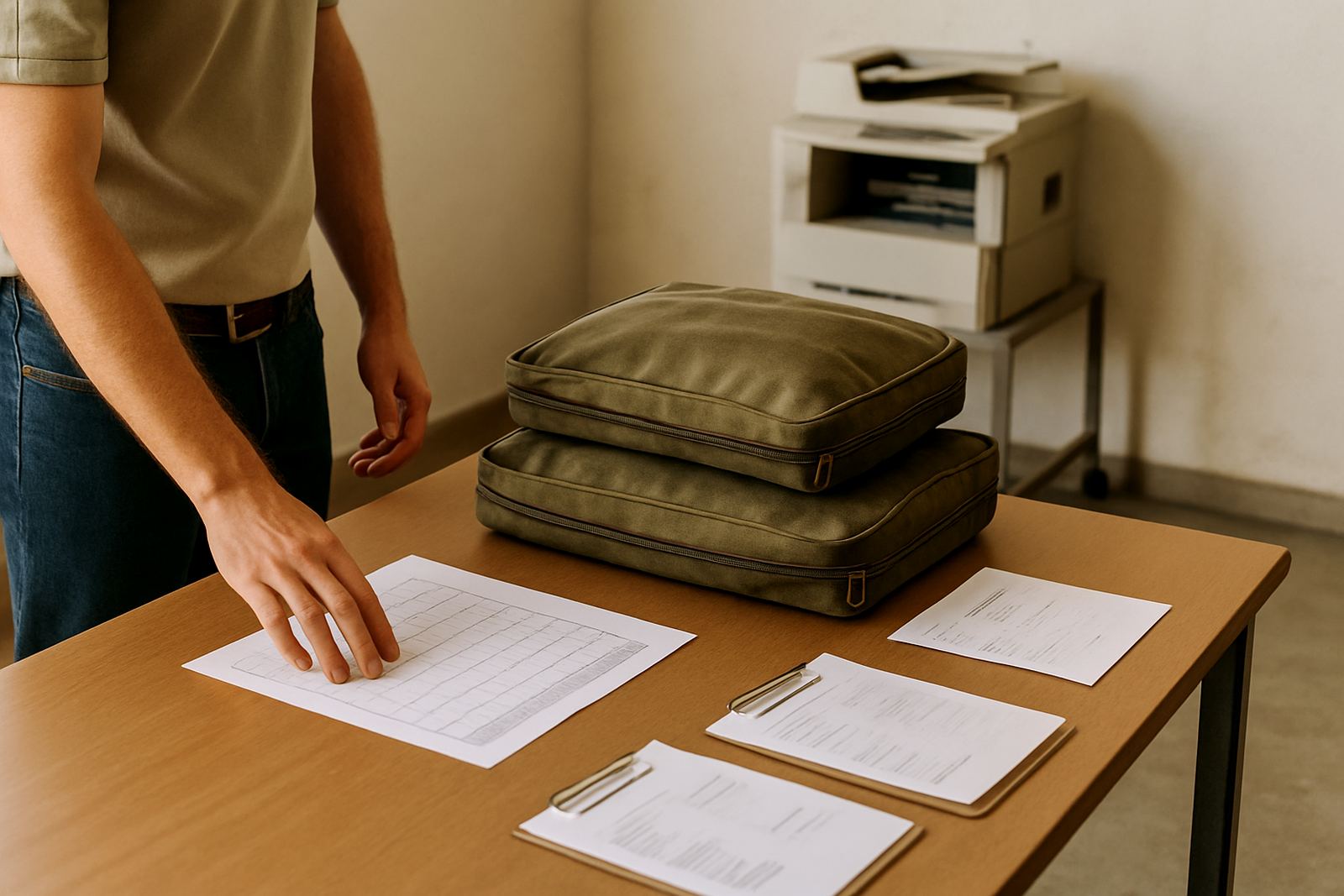


Start with the transfer details before booking
A clean branch transfer begins with clear information. Before you place the booking, confirm exactly what is moving, where it is going, and when it must arrive. That sounds basic, but it is the step that prevents missed collections, wrong drop off points and delays at reception. For companies with offices in Johannesburg, Sandton, Randburg, Pretoria, the East Rand, Durban or Cape Town, the same rule applies: one clear instruction set makes the run faster and easier to track.
For documents, list the number of envelopes or files and whether anything is confidential. For parcels, note the size, weight and whether the item is fragile, moisture sensitive or needs a signature on delivery. If the branch is in a building with security control, give the name of the person who will release the parcel and the receiving contact at the destination. That small detail saves time at peak traffic and during load-shedding related access delays.
Pack branch transfers for quick handover
Branch transfers should be packed for speed, not just for appearance. Use a solid envelope, satchel or box that matches the item size so there is less movement in transit. In coastal areas like Durban and Cape Town, use packaging that handles humidity, especially for printed documents, files and labels. If the item may be handled by several people in one day, add a clear routing slip on the outside with branch names and the final recipient.
Do not overfill a packet, and do not leave loose pages inside a parcel. If you are sending internal mail runs between branches, seal each batch separately so one delivery note does not get split across offices. A little tape at the seams helps, but if the package needs to be opened and resealed by a branch team, make that clear on the note.
- Seal every envelope or box properly
- Mark the branch name and receiving contact clearly
- Use waterproof labels where humidity is high
- Keep documents flat and free of loose items
- Separate urgent items from routine transfers
Choose the right transfer service for the job
Not every branch movement needs the same service. A-Two offers daily collections, scheduled routes, dedicated courier support and priority bookings, so you can match the service to the urgency of the transfer. If the item is time critical, such as tender submissions or signed compliance papers, a direct same-day run is usually the safest option. If the movement happens on a regular cycle, a scheduled route or account based collection keeps the process steady and easier to budget for.
For larger office networks, multi-branch support helps when one collection needs to be split across several destinations. That is useful for businesses with a Midrand base and teams spread across Gauteng, or for clients moving documents between metro hubs in Durban and Cape Town. When you need the same item handled from collection to proof of delivery with a clear trail, dedicated courier service gives you tighter control.
- Use same-day priority for urgent documents or parcels
- Use scheduled routes for predictable weekly or daily movement
- Use dedicated courier when the item must stay on one vehicle
- Use multi-branch support for distributed office networks
Prepare the collection point so the driver is not waiting
Most delays happen at collection, not on the road. Make sure the parcel is ready before the driver arrives, with the correct contact person available to release it. If your branch is inside a park, mall or shared building, tell security in advance and confirm any sign in procedure. In busy centres like Sandton or Pretoria, access rules can add a few minutes, so it helps to have the item at reception or at the agreed handover point before the collection window starts.
If there are multiple items, line them up in the order they must be delivered. For branch transfers between offices, that order should match the route notes. Keep a copy of the collection instruction with the packer or sender so there is no confusion about what was handed over. A short written handover record is usually enough, and it reduces disputes later on.
- Have the parcel or file ready before the vehicle arrives
- Confirm the release person and the receiving branch
- Follow building access rules and security sign in steps
- Keep a handover note or internal reference number nearby
Track proof of delivery and branch receipt
Proof reporting is part of good branch transfer control. Once the item is delivered, the receiving branch should know who accepted it and at what time. For important papers, ask for the name and surname of the recipient, plus any internal reference or file number. If the transfer includes returns management, check that the returned item is matched to the original outbound record so nothing gets lost in the shuffle. It sounds small but it saves hours later.
A-Two’s operations team keeps the process practical, with dispatch and client services able to follow up on the status if a branch needs confirmation. This is useful for companies handling internal mail runs, compliance packs or event materials where multiple offices must see the same status. If a parcel is delayed by traffic, weather or building access, you want to know early rather than after the receiving team has gone home.
Use an internal checklist for repeat transfers
Once your branch transfer routine is set, use the same checklist every time. That gives your staff a simple system and helps the courier team move faster. Businesses that run daily collections or scheduled routes usually benefit most from a fixed checklist because it reduces mistakes across branches and keeps the process consistent from Midrand to Durban or Cape Town.
A practical checklist also helps with account management. If your company sends the same types of documents each week, the pattern becomes easy to review and adjust. You can note peak days, special access instructions, and which branches need early collections to beat traffic. The more consistent the notes, the smoother the handovers.
- Confirm collection time and destination branch
- List item type, quantity and urgency
- Check packaging, labels and internal references
- Record the sender and receiver contacts
- Request proof reporting where needed
- Note any access restrictions or special handling
When to call for support from the Midrand team
If a transfer is urgent, sensitive or split across several branches, bring in support early. A-Two works from Midrand with same-day runs across Gauteng and metro hubs in Durban and Cape Town, so the team can plan the right vehicle and route from the start. That matters when a tender packet, legal file or small parcel has a fixed closing time and there is no room for rework.
Marnus Lombard leads the business, with a team that handles dispatch, route control, client queries and compliance checks day to day. The point is simple: if the transfer needs a clear chain of custody, careful timing and a clean paper trail, ask before the deadline gets tight. It is easier to plan a transfer properly than to rescue one that was rushed at the last minute.
To arrange a branch transfer, clients should use the enquiry form on the contact page. From there, the team can confirm the route, collection point, delivery branch and any special handling instructions.