

When to book a return collection
A return collection works best when the sender, recipient and item details are ready before the vehicle is booked. If you are sending documents back from Midrand to Sandton, or returning signed packs from Durban or Cape Town branch offices, a clear handover saves time and avoids missed stops.
Book a return as soon as the item is ready to leave the site. Same-day movement is often possible on Gauteng routes, while metro hub collections in Durban and Cape Town should be booked early in the day where possible. If the return is tied to a deadline such as a tender pack, account file or signed contract, tell us the cutoff time and the exact delivery point.
- Have the sender name and contact person ready
- Confirm the pickup address, floor, security procedure and reference number
- State whether the item is a document pack, sealed envelope, boxed item or loose item
- Let us know if the return needs proof of collection or proof of delivery
How to prepare documents, signed packs and small items
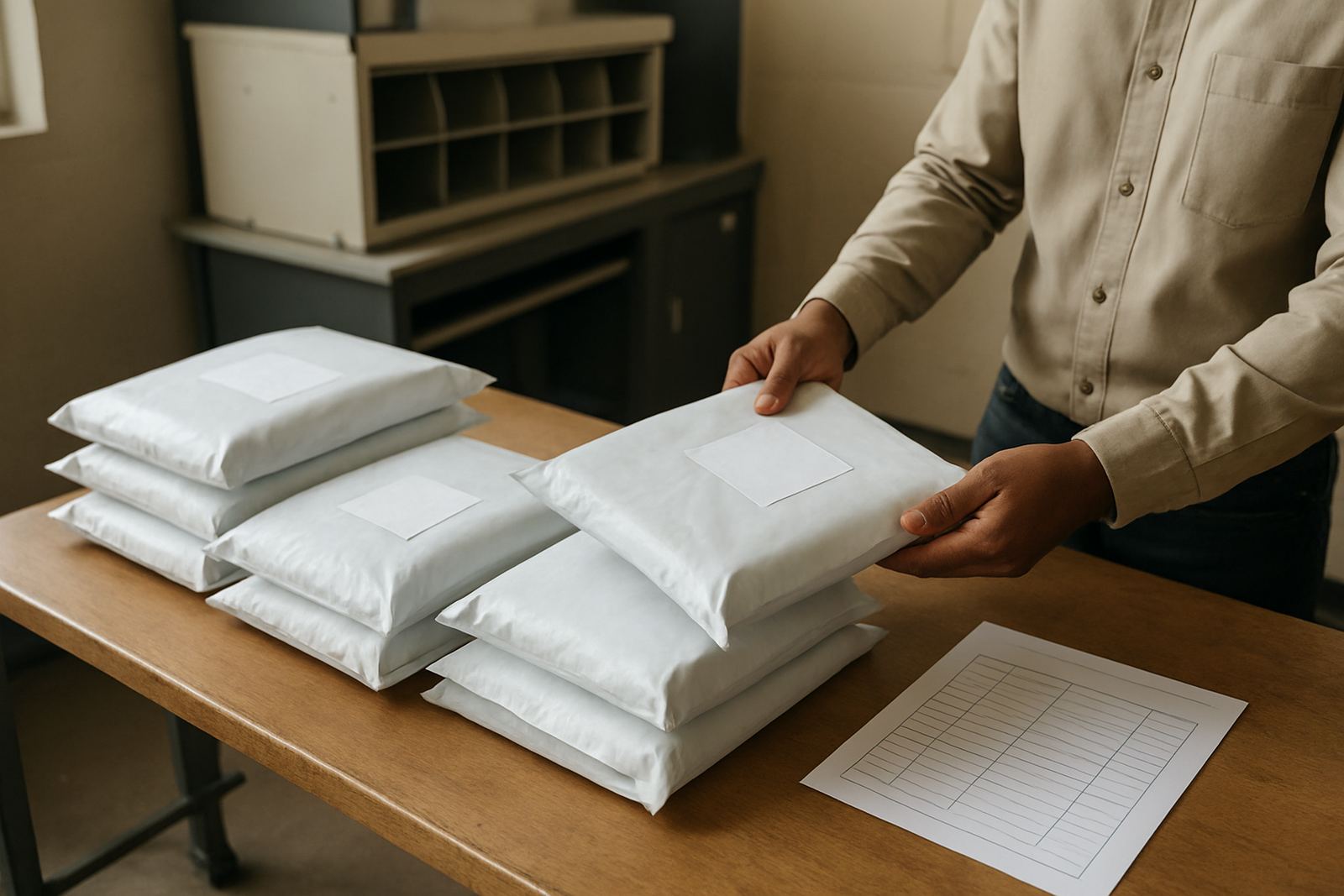
Returns are usually straightforward when the item is packed for quick checking at collection. Documents should be placed in a sealed envelope or file sleeve, with the reference written clearly on the front. Signed packs should stay flat and dry. For small items such as cards, labels, samples or compact office items, use a box or padded pouch that keeps the contents from moving around.
If the item is sensitive to moisture, especially on coastal routes in Durban or Cape Town, use a sealed sleeve or plastic wrap inside the outer pack. For offices dealing with load-shedding, it helps to keep a printed copy of any dispatch note near the item, in case access control systems are down when the vehicle arrives.
- Seal the pack with tape or a tamper-evident seal where needed
- Remove loose staples, clips or sharp items that may damage other contents
- Mark fragile, urgent or confidential items clearly
- Check that the contents match the return note before handover
Label the return correctly the first time
Good labelling prevents delays at security, reception and receiving. Each return should show the destination, the sender and a reference that matches your instruction. If your business uses branch codes, job numbers or matter numbers, include them on the label and on the handover note. This is especially useful for multi-branch work in Johannesburg, Pretoria, Randburg and the East Rand.
A clear label also helps with split returns, where one batch may go to the head office in Midrand and another to a branch or client site. Keep handwriting legible and avoid using only initials. If a pack contains confidential material, write the outside reference only and leave detailed contents off the face of the envelope.
- Destination name and full address
- Sender name and internal reference
- Contact person at collection and delivery points
- Any access notes, parking rules or security restrictions
What to expect on collection day
On collection day, our dispatcher team confirms the route and the driver arrives within the agreed window. Please have the item ready, sealed and handed over at the collection point. If the item is in a reception area, guard room or records room, make sure the person in charge knows who will release it. That avoids waiting while staff search for the correct file or key.
For returns from offices with strict access controls, let the receiving team know if a vehicle registration number must be logged. In busy business parks around Midrand and Sandton, this can save several minutes. If the area has limited parking or a loading bay only, tell us before dispatch so the route can be planned properly.
- Keep the item at reception or in the agreed handover point before the vehicle arrives
- Ensure the relevent person is available to sign if required
- Have your reference and recipient details on hand
- Ask for proof reporting if you need a collection record for audit or filing
Tracking, proof and returns records
Many returns need a paper trail, not just a delivery. For this reason, we can provide proof reporting that shows collection and delivery details for the trip. This is useful for legal practices, finance teams, HR departments and procurement offices handling signed packs or original documents. It also helps when you need to match a returned item against an internal register.
If your business handles recurring returns, ask for account management and scheduled routes. That way the same pickup pattern can repeat each day or each week, which is useful for internal mail runs, branch transfers and document exchanges between offices in Gauteng, Durban and Cape Town. It cuts down on repeated instructions and keeps the process neater.
- Keep a copy of the dispatch note or return instruction
- File the proof against the correct job number or branch name
- Note any exceptions, such as a partial return or missing attachment
- Report delivery issues as soon as possible so the record can be corrected
Common return problems and how to avoid them
Most delays come from missing details, late handovers or poor packaging. A return marked only with a surname or first name can sit in reception while staff work out where it belongs. Loose papers can curl or tear, and a small item without proper padding may move around in transit. If the return is urgent, tell us at the start rather than after the vehicle has already been scheduled.
For tender submissions, event packs or compliance files, double-check that every page and attachment is included before the collection is released. When returning items from coastal offices, watch for damp conditions and use an inner seal if needed. In load-shedding periods, it is also wise to print the handover note early, because offices can go quiet when systems are down.
- Do a final count before sealing the pack
- Keep one contact person available for questions
- Use a stronger outer sleeve for weather exposure or repeated handling
- Tell us if the return must connect to a same-day onward delivery