

Check Incoming Items Before You Sign
Before signing for any parcel or document, inspect the item for visible damage, wet marks, broken seals or missing labels. This is especially important in rainy weather in Johannesburg or Durban where cartons can pick up moisture during transit. If the package looks damaged, note it on the waybill or delivery record immediately, then alert the relevant department before the item is opened.
Reception staff should confirm the sender name, recipient name, reference number and branch destination. A parcel meant for a Pretoria office should not be stored with Sandton mail, even if the names are similar. If something is unclear, pause the handover and phone the internal contact rather than guessing. A few extra seconds now can save a lot of backtracking later.
- Check the outer packaging for tears, dents or water damage.
- Confirm the recipient and branch before signing.
- Mark exceptions clearly on the delivery record.
- Keep a copy of any signed proof for internal use.
Log Every Item So Nothing Goes Missing
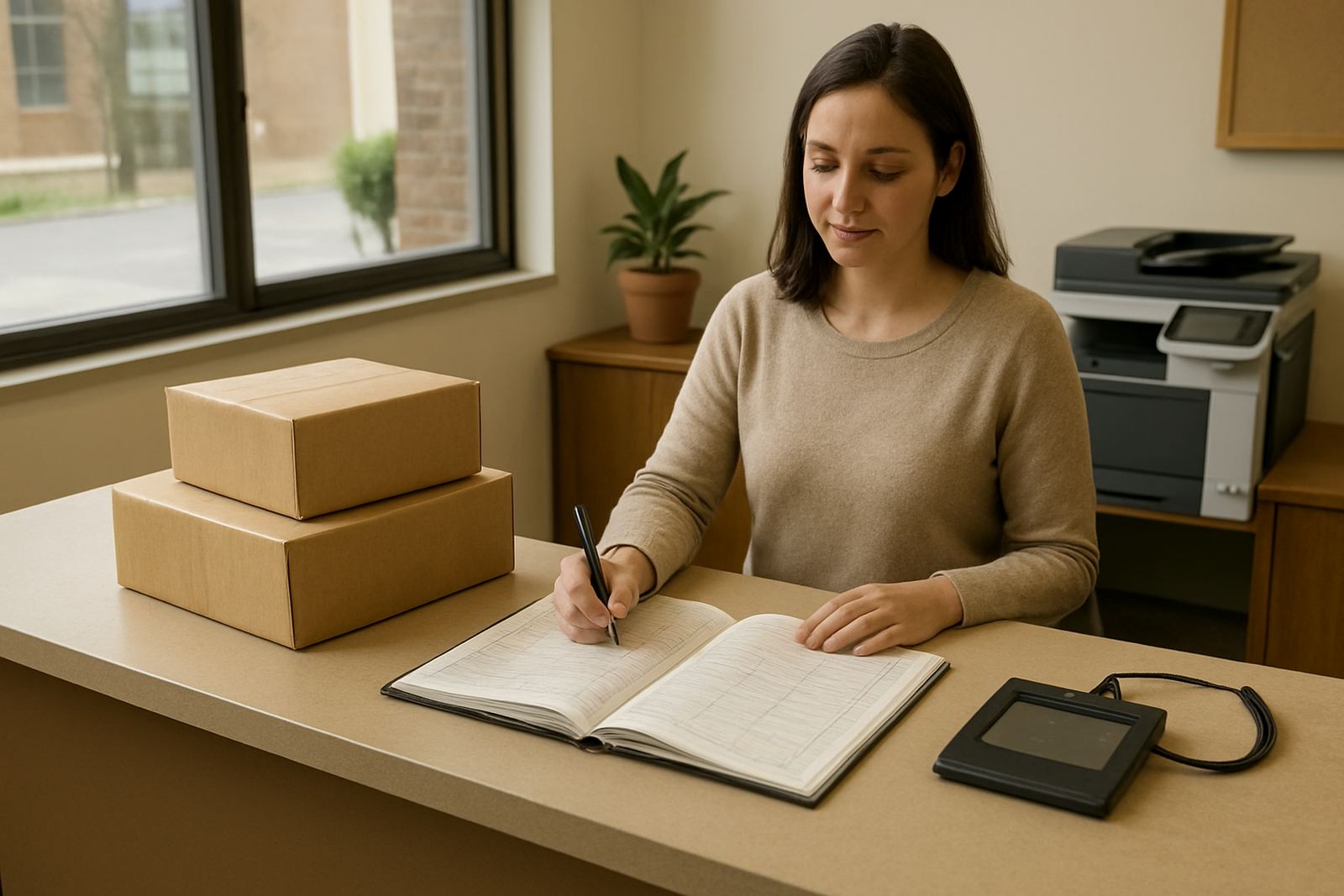
A proper log helps reception staff track who received what and when. Record the date, time, sender, recipient, reference number, parcel count and condition. For confidential documents, add the name of the person who took delivery inside the office. This matters when tender submissions, contracts or compliance packs move through the building and more than one person handles the same file.
If your office receives daily collections, use the same format each day so the team can find old records quickly. A handwritten logbook is acceptable if it is kept neat and complete. For offices that deal with more volume, a spreadsheet or internal register may be easier to search. The main thing is consistency, not fancy tools.
- Write down the time of arrival and time of release.
- Include the delivery reference or internal job number.
- Note any special instructions, such as confidential or fragile.
- Keep signed records in one folder for easy audits.
Prepare Outgoing Parcels for Same-Day Collection
Outgoing items should be packed, labelled and ready before the collection vehicle arrives. For same-day courier runs across Gauteng, timing is tight, so the parcel should already have the right address, contact person and floor or suite number. If you are sending items to Cape Town or Durban metro hubs, confirm the collection cut-off with your internal team early in the day.
Use strong packaging, especially for papers in thin envelopes or small parcels that can bend in transit. In hot weather, adhesive labels may lift if they are not pressed down properly. If the office uses printed waybills, check that the barcode or reference is clear and not smudged. One small error can slow down a whole route.
- Seal the parcel properly and test the tape at the corners.
- Check the address twice, including suburb and postal code.
- Attach any special handling notes before collection.
- Group multiple items for the same destination together.
Handle Urgent, Confidential and Returns Work Carefully
Some items need more care than ordinary office mail. Urgent tenders, legal papers, signed contracts and staff documents should be treated as priority items and handed only to the correct person. For confidential material, keep the item out of public view and never leave it unattended on the counter. A short delay is better than a privacy issue.
Returns also need a clean process. Whether it is a signed document going back to head office or an item being sent back to a supplier, note the reason for return and the expected recipient. If your office uses internal mail runs between branches, make sure the envelope or parcel shows the branch name clearly, for example Midrand to Johannesburg or Randburg to Pretoria. That saves confusion when more than one branch is active on the same day.
- Keep confidential items in a secure tray or drawer.
- Mark priority parcels clearly, but do not write sensitive content on the outside.
- Record return reasons and destination details.
- Hand over only to authorised staff members.
Know Who to Call When the Day Gets Busy
Reception is easier when responsibilities are split clearly. Operations staff can manage route planning, while reception focuses on logging, sorting and releasing items correctly. If a courier is delayed, a parcel is missing, or an urgent file needs a priority booking, the receptionist should know which internal team member to contact first. That avoids repeated phone calls and mixed messages.
At A-Two, businesses often use account management, scheduled routes and multi-branch support to keep things moving without chaos. For reception teams, the value is simple: fewer surprises and better visibility. When the handover process is consistent, it becomes easier to support staff, clients and visitors, even on days when load-shedding, traffic or weather slow everything down.
- Keep the internal escalation list next to the courier register.
- Know who approves urgent bookings after hours or near close of business.
- Report missing, damaged or late items immediately.
- Confirm collection times before end of day so parcels are not left behind.